
Key Takeaways
- Severe nearsightedness happens when your eyeball grows too long from front to back.
- This condition increases your risk for other vision problems later in life.
- Regular visits to an eye care professional help manage your ongoing eye health.
- You have several options to correct your vision and support your daily activities.
High Myopia Is a Risk Factor
Myopia is a vision condition that causes blurry distance vision, while near vision remains unaffected. Common symptoms include struggling to read road signs, difficulties seeing the front of a classroom, and squinting to watch TV. If a person with myopia needs an especially strong prescription to see clearly, we call this “high myopia”.
High myopia presents significant risks to eye health over time, including the development of complications like glaucoma and macular degeneration.
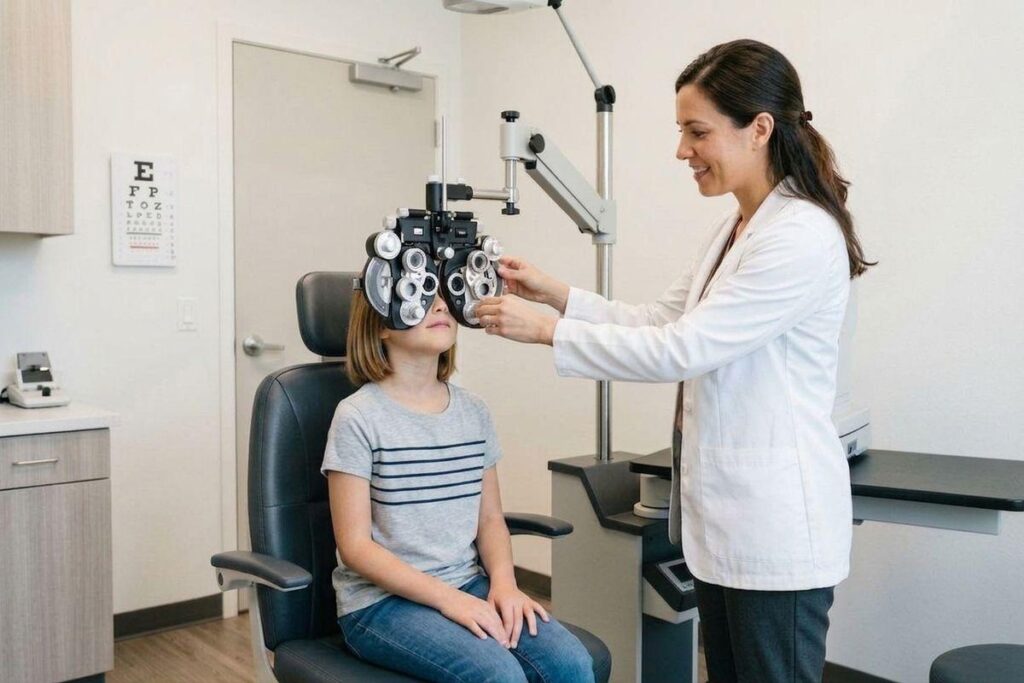
While myopia itself can’t be reversed, the rate at which the condition progresses can be slowed in children with myopia control. That’s why, if your child is showing symptoms, our team at Total Vision Lake Elsinore can examine their eyes and develop a plan to help protect their future vision.
The Basics of Myopia
How the Eye Changes
Myopia is caused when the eyeball grows too long. This extra length changes how light reaches your retina (a tissue at the back of your eye that converts light into signals for your brain), which in turn causes blurry distance vision.
The strength of a person’s prescription is measured in a unit called diopters. People with normal myopia have prescriptions less than -6.00 diopters, while people with high myopia have prescriptions of -6.00 diopters or higher.
Signs to Watch For
The following signs can all point to myopia:
- Blurry distance vision
- Having to squint to see far away objects
- Frequent headaches and eye strain
In children, behaviors like sitting too close to the TV or avoidance of schoolwork and reading can also be symptoms.
Risks to Vision Due to High Myopia
Common Eye Conditions
When the eyeball is too long, this stretches other tissues in your eye, making you more prone to developing other vision conditions. Some of these risks include:
- A higher chance of developing glaucoma
- Earlier onset of cataracts
- An increased risk of a torn retina
- Being more likely to develop macular degeneration
Retinal issues require prompt medical attention in order to protect vision, while issues like glaucoma and macular degeneration cause slow but steady vision loss, often without obvious early symptoms.
If you do have high myopia, it’s important to schedule regular eye exams. This allows your optometrist to check for developing conditions and help you protect your future vision.

Options for Vision Correction
Glasses & Contact Lenses
For people with high myopia, high index lenses offer an effective option for lighter glasses that feel comfortable on your face rather than heavy on your nose.
Daytime contacts can also help correct your vision without the bulk of frames.
You might also consider exploring ortho-k lenses. These rigid contacts shape your eyes gently overnight to help provide clear vision during your waking hours.
Refractive Surgery Options
Many adults look into surgical procedures to reduce their need for glasses. Laser eye surgery can reshape the cornea to improve how light enters your eye.
However, refractive surgery doesn’t change the length of your eyeball, so the underlying risks of high myopia remain unchanged after the procedure.
Regular visits with your eye doctor in Lake Elsinore help track your ongoing eye health before and after any surgery.
Myopia Control
Myopia control is a process designed to slow progression of the condition in children. Common options include specialty glasses and contacts designed to slow elongation of the eye, ortho-k lenses, and low dose atropine eye drops.
By slowing myopia down, we can protect children’s future vision by helping them reach adulthood with better vision than they’d otherwise have.
Routine Care with Your Eye Doctor
Consistent checkups provide the foundation for clear vision. Our team closely monitors your eye health to catch any small changes early on. Plan for detailed exams every 1 to 2 years to keep your prescription current.
Taking care of your eyes helps you enjoy your daily activities safely. Our team at Total Vision Lake Elsinore can help you find the right vision correction options for your specific needs. Schedule an eye exam today to stay proactive about your long-term vision health.
