
Key Takeaways
- Regular eye exams help identify nearsightedness early.
- Painless tests measure vision clarity and eye health.
- Glasses and contact lenses can manage vision changes.
- Early support helps kids succeed at school and play.
Eye Exams Help Diagnose Myopia
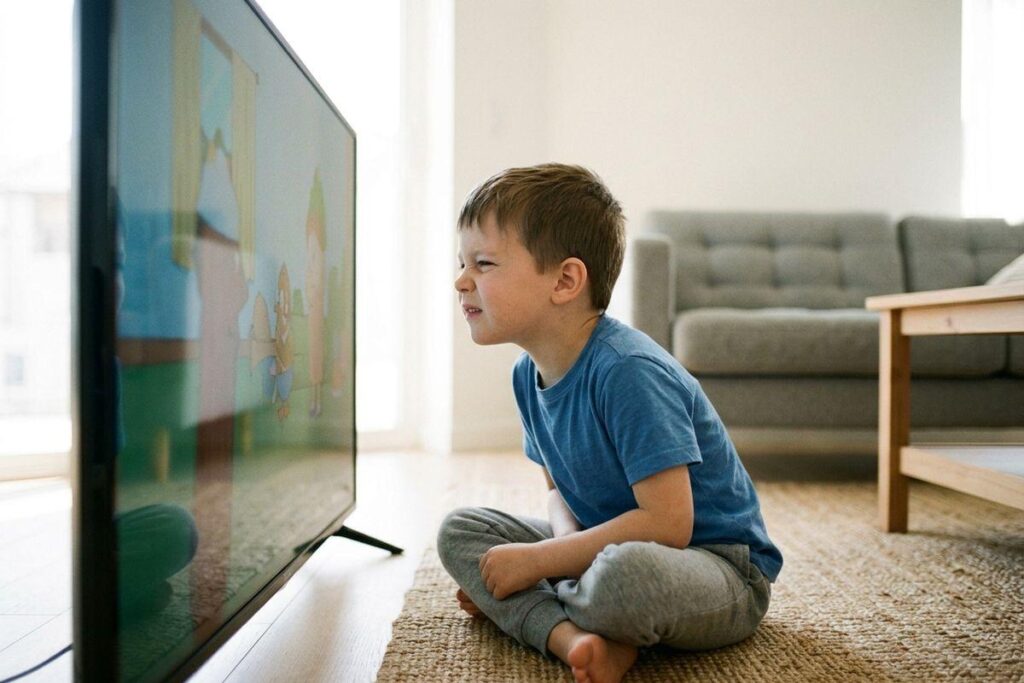
If you notice your child squinting at the whiteboard or sitting a few inches away from the television screen, these habits could indicate blurred distance vision. Nearsightedness often sneaks up quietly during regular growth spurts.
Catching vision changes early requires a professional evaluation. At Total Vision Lake Elsinore, we diagnose childhood myopia with comprehensive pediatric eye exams that include vision charts and light reflection tests.
Common Signs of Nearsightedness in Children
Children rarely realize their vision looks blurry. They simply adapt by moving closer to objects or changing how they look at things. Watch for the following behaviors:
- They frequently squint to see faraway objects.
- They sit too close to the television or digital screens.
- They rub their tired eyes or blink frequently throughout the day.
Recognizing these signs for what they are can help you take the right steps to protect your child’s vision.
Age Factors & Development of Myopia
Vision changes often accompany physical growth. This is because the eyes grow alongside the rest of the body. When eyes grow too long front-to-back, this causes them to focus light incorrectly, resulting in blurry vision.
Routine visits to the eye doctor help track these changes as your child grows.
The Typical Pediatric Eye Exam
Walking into an eye clinic might feel intimidating for a young child. However, our team works hard to keep the environment calm and welcoming. Each visit starts with a simple chat about daily vision habits, during which you can share how your child performs at school and handles homework.
A review of your family history comes next. Genetics can play a big role in vision development.
After discussing family history, your child’s eye doctor will check their overall eye health. This includes taking a close look at the structures of the eyes in order to rule out potential health concerns.
Tests Used for Diagnosis
Eye doctors rely on a few key measurements to understand your child’s vision. Here are some of the common tests they perform:
The Visual Acuity Test
This familiar test measures basic vision clarity from a distance. It involves reading letters or shapes off of a wall chart, which checks vision clarity from 20 feet away.
Kids who don’t know their letters yet can be tested by looking at simple pictures instead. This gives your child’s care team a solid baseline for their vision.
Retinoscopy and Phoropter Tests
Children can’t always explain what looks clear or blurry. A retinoscopy exam helps gather this information. This exam involves shining a gentle light into the eye, then measuring how that light is refracted.
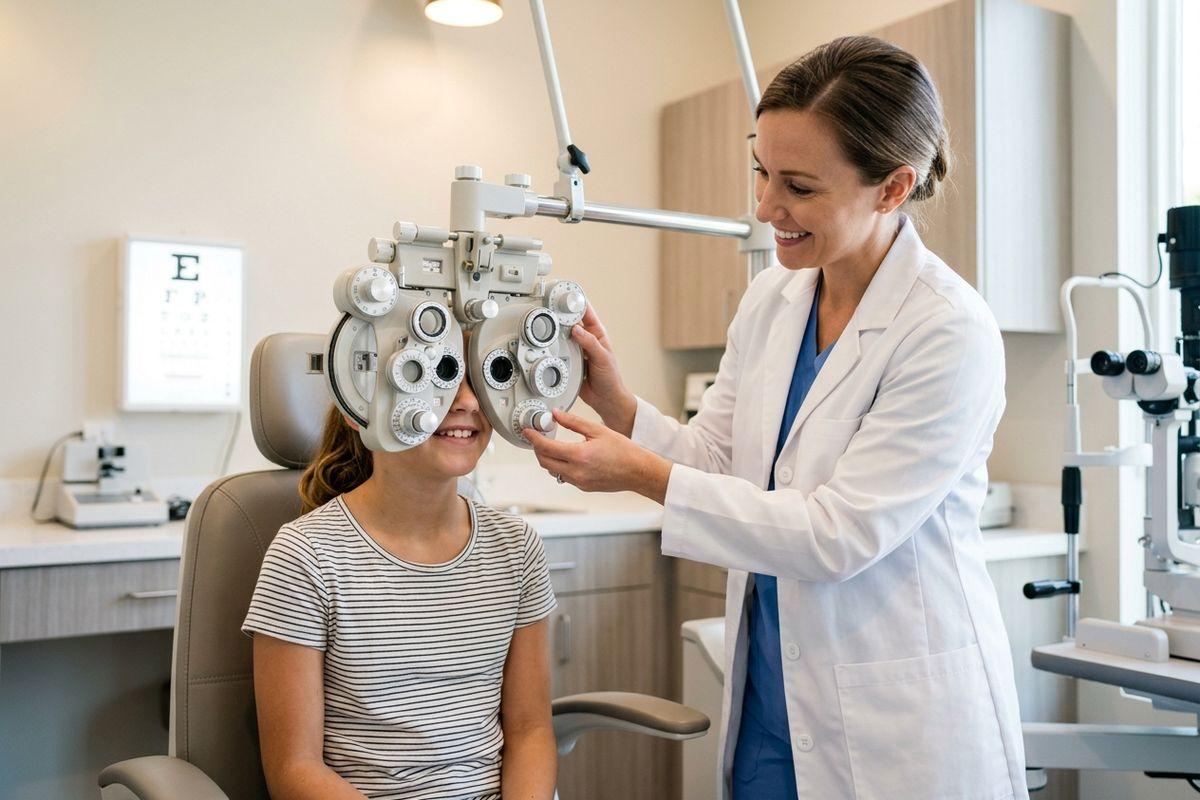
Phoropters are devices that contain many different sets of lenses. By switching from lens to lens and asking your child which lenses produce clearer vision, your eye doctor can identify the right fit for their prescription.
Options and Next Steps After Diagnosis
Myopia Control Methods
Our practice offers several evidence-based myopia control treatments designed to help slow the progression of nearsightedness in children. After a comprehensive eye exam, we’ll recommend the option that’s best suited to your child’s needs.
Myopia control options include:
- Low-Dose Atropine Eye Drops: Daily medicated eye drops that help slow myopia progression while a child’s eyes are still developing.
- Corneal Reshaping (Orthokeratology) Contact Lenses: Special overnight lenses that gently reshape the cornea, providing clear daytime vision without glasses while helping slow myopia progression.
- Peripheral Defocus Contact Lenses: Multifocal soft contact lenses that provide clear central vision while creating peripheral defocus, which may help reduce eye growth and slow myopia progression.
Vision Correction with Glasses or Contact Lenses
Realizing that your child needs vision support is the first step towards finding a solution. Prescription glasses or comfortable contact lenses offer immediate support for blurry distance vision. Many kids love picking out frames that match their personality.
The Importance of Outdoor Time
Spending more time outdoors in natural light can also support healthy eye development. Natural sunlight helps regulate eye growth during childhood.
Visit Your Trusted Local Optometrist
If you notice your child squinting or moving closer to screens, you have local resources available, an eye doctor in Lake Elsinore to evaluate their vision. At Total Vision Lake Elsinore, we provide the care your family needs to see clearly every day. Book your appointment today.
